Memory game for kids: find the pairs
Tap a card to turn it over, then tap another one. Are they the same? Then they stay open. Level 1 has 4 cards, level 2 has 6 and level 3 has 8. There is no clock and no score.
Memory pairs
Tip for grown-ups
Turn-taking makes this a social game. Praise waiting as much as finding.
How to use it, step by step
- Play together and say the name of each card you turn over.
- Take turns: “Your turn, my turn.” Waiting for a turn is practice too.
- Start with level 1. Four cards are plenty for young children.
📚 Which research is this based on?
Memory is a play activity, built here on simple visual supports (AFIRM) and immediate praise for each pair found, the reinforcement principle described in the NCAEP 2020 report and the AFIRM Reinforcement module. This is a learning game, not a therapy programme.
- AFIRM: Visual Supports: AFIRM (Autism Focused Intervention Resources and Modules), FPG Child Development Institute, UNC: Visual Supports module.
- AFIRM: Reinforcement: AFIRM, FPG Child Development Institute, UNC: Reinforcement module.
- NCAEP 2020 report: Steinbrenner, J. R., Hume, K., Odom, S. L., et al. (2020). Evidence-Based Practices for Children, Youth, and Young Adults with Autism. FPG Child Development Institute, University of North Carolina at Chapel Hill, National Clearinghouse on Autism Evidence and Practice (NCAEP).
Also try
- Printable PDFEmotions cards
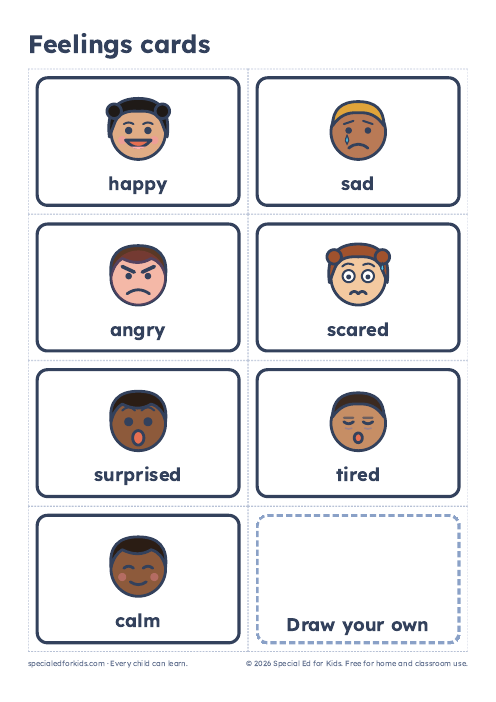
Seven feelings faces plus a daily “How do I feel today?” check-in chart.
- Browser gameFeelings faces
Who feels happy, sad or angry? Learn feeling words with friendly faces.
- Browser gameListen and find
Hear a word and find the picture: food, animals and everyday things.
- Browser gamePicture match
Find the same picture. One clear task at a time, no timer and no losing.
- Browser gameCounting 1–10
Tap each picture to count, then find the right number.
- Browser gameSorting game
Drag each picture to the right box: colors, shapes, then animals, food and vehicles.
- Browser gameDaily routine in order
Put morning, day and evening pictures in order, with gentle hints.
- Printable PDFVisual schedule
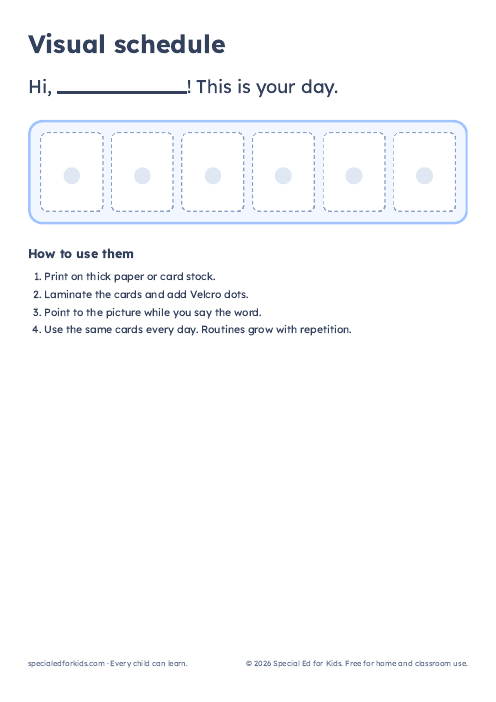
Picture cards for the daily routine, from waking up to bedtime, plus blank cards to draw your own.
- Printable PDFFirst-then board
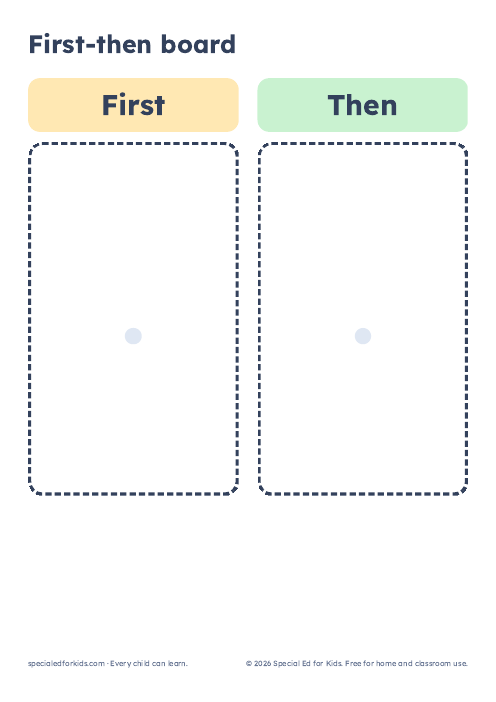
Two boxes: first the task, then something the child enjoys.
- Printable PDFToken board
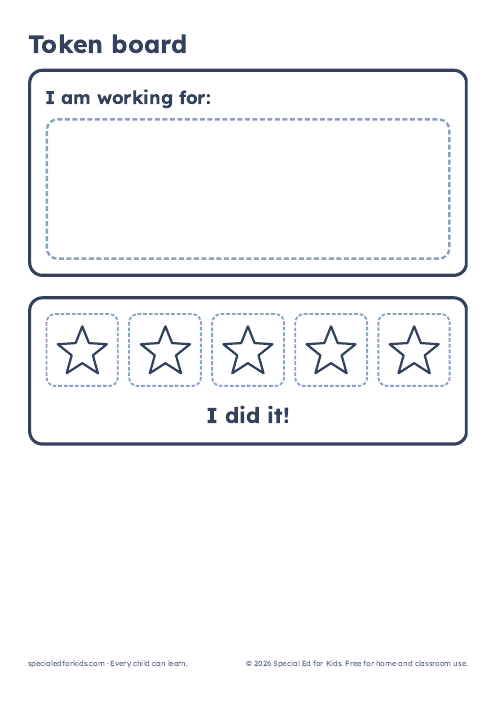
The child earns five stars, then gets the reward they chose.
- Printable PDFSocial story template
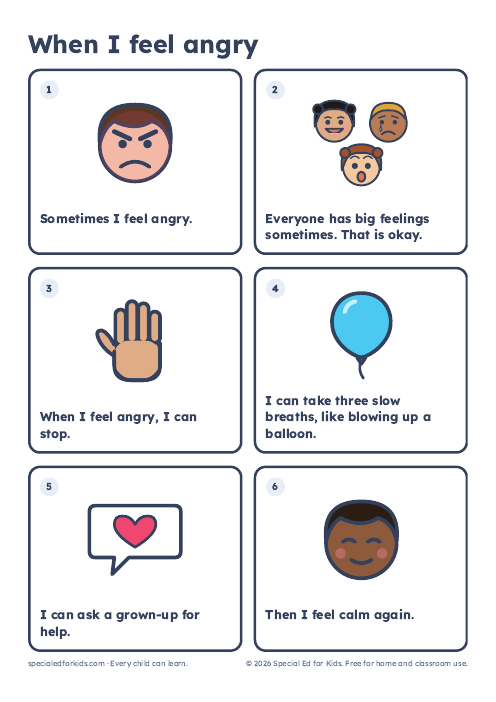
A blank 6-box story template and an example story: “When I feel angry”.
- Guide for parentsHow to use a visual schedule at home
A step-by-step guide for parents: set up, teach and slowly fade a picture schedule.