Feelings game: find the happy face
Listen to the question and tap the face that shows the feeling. Start with happy and sad, then add more feelings at level 2 and 3. Children of many skin tones, big buttons and a gentle hint after a wrong tap.
Feelings faces
Tip for grown-ups
Talk about why someone might feel that way. There are no bad feelings, only feelings we learn to name.
How to use it, step by step
- Make the face together in a mirror first: “Show me happy!”
- Play level 1 (happy and sad). Name the feeling when the child finds it.
- Move to level 2 and 3 only when level 1 feels easy. Link feelings to real moments: “You were happy at the park.”
📚 Which research is this based on?
Recognising emotions is a core part of social skills teaching described in the AFIRM Social Skills Training module and the NCAEP 2020 report. The game uses pictures as visual supports and gives a calm hint after a wrong tap (prompting). This is a learning game, not a therapy programme.
- AFIRM: Social Skills Training: AFIRM, FPG Child Development Institute, UNC: Social Skills Training module.
- NCAEP 2020 report: Steinbrenner, J. R., Hume, K., Odom, S. L., et al. (2020). Evidence-Based Practices for Children, Youth, and Young Adults with Autism. FPG Child Development Institute, University of North Carolina at Chapel Hill, National Clearinghouse on Autism Evidence and Practice (NCAEP).
- AFIRM: Visual Supports: AFIRM (Autism Focused Intervention Resources and Modules), FPG Child Development Institute, UNC: Visual Supports module.
- AFIRM: Prompting: AFIRM, FPG Child Development Institute, UNC: Prompting module.
Also try
- Printable PDFEmotions cards
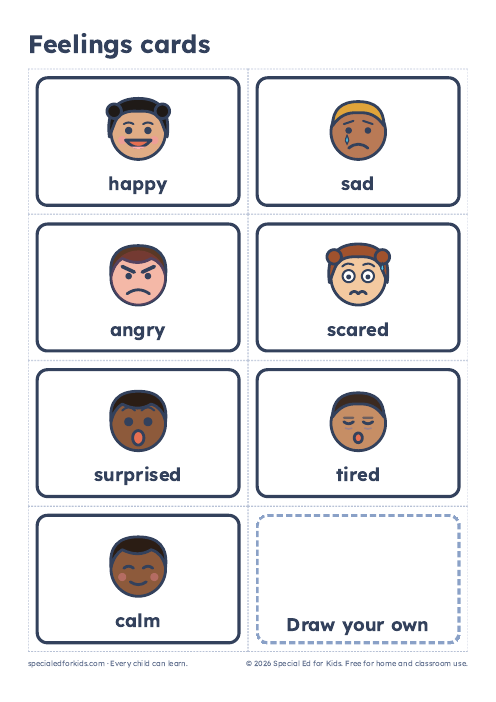
Seven feelings faces plus a daily “How do I feel today?” check-in chart.
- Browser gameListen and find
Hear a word and find the picture: food, animals and everyday things.
- Browser gamePicture match
Find the same picture. One clear task at a time, no timer and no losing.
- Browser gameCounting 1–10
Tap each picture to count, then find the right number.
- Browser gameSorting game
Drag each picture to the right box: colors, shapes, then animals, food and vehicles.
- Browser gameDaily routine in order
Put morning, day and evening pictures in order, with gentle hints.
- Browser gameMemory pairs
Turn two cards and find the pairs. Starts with only four cards.
- Printable PDFVisual schedule
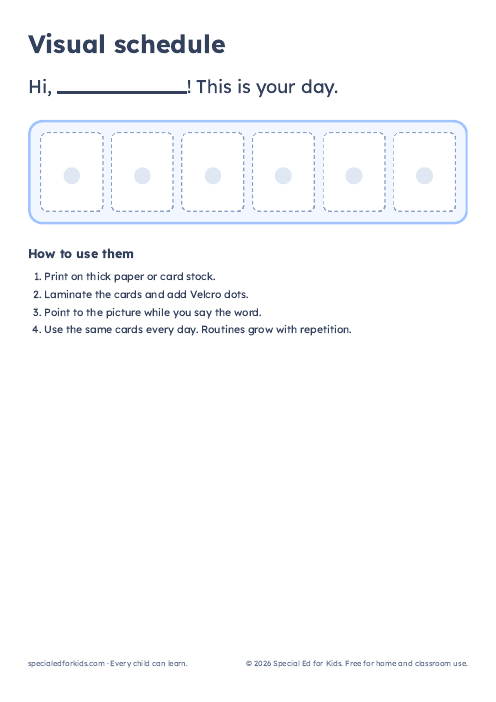
Picture cards for the daily routine, from waking up to bedtime, plus blank cards to draw your own.
- Printable PDFFirst-then board
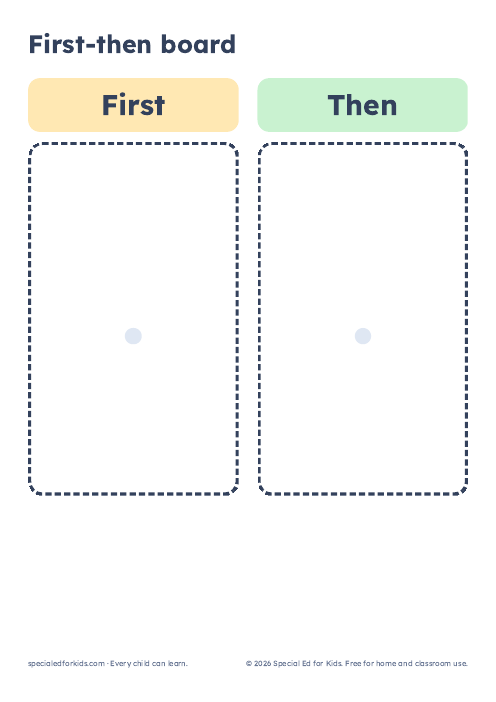
Two boxes: first the task, then something the child enjoys.
- Printable PDFToken board
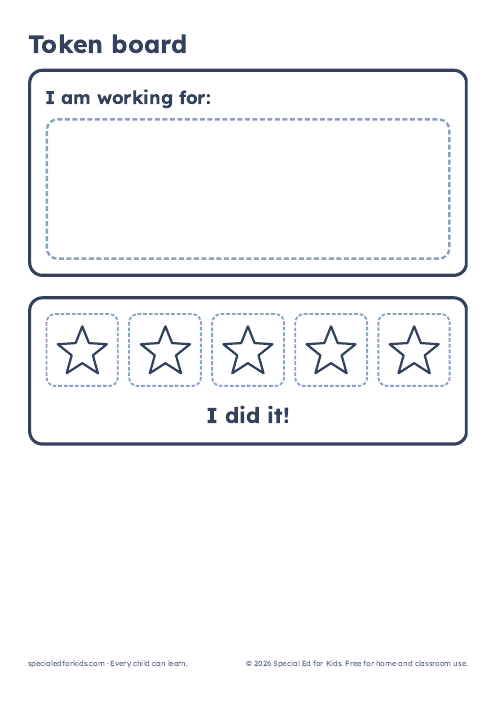
The child earns five stars, then gets the reward they chose.
- Printable PDFSocial story template
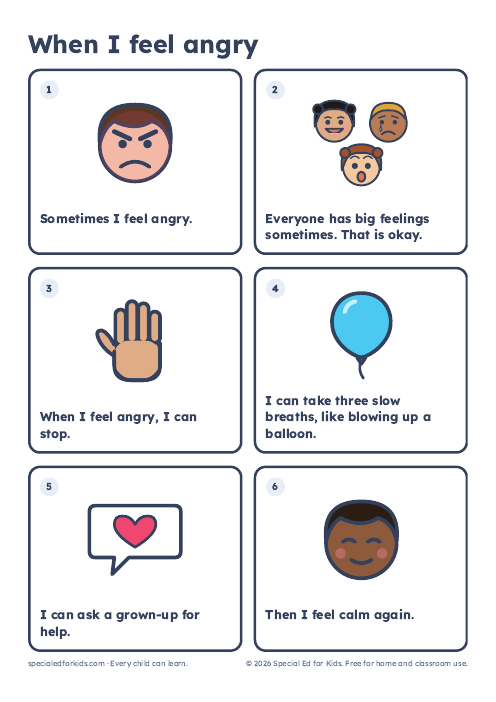
A blank 6-box story template and an example story: “When I feel angry”.
- Guide for parentsHow to use a visual schedule at home
A step-by-step guide for parents: set up, teach and slowly fade a picture schedule.